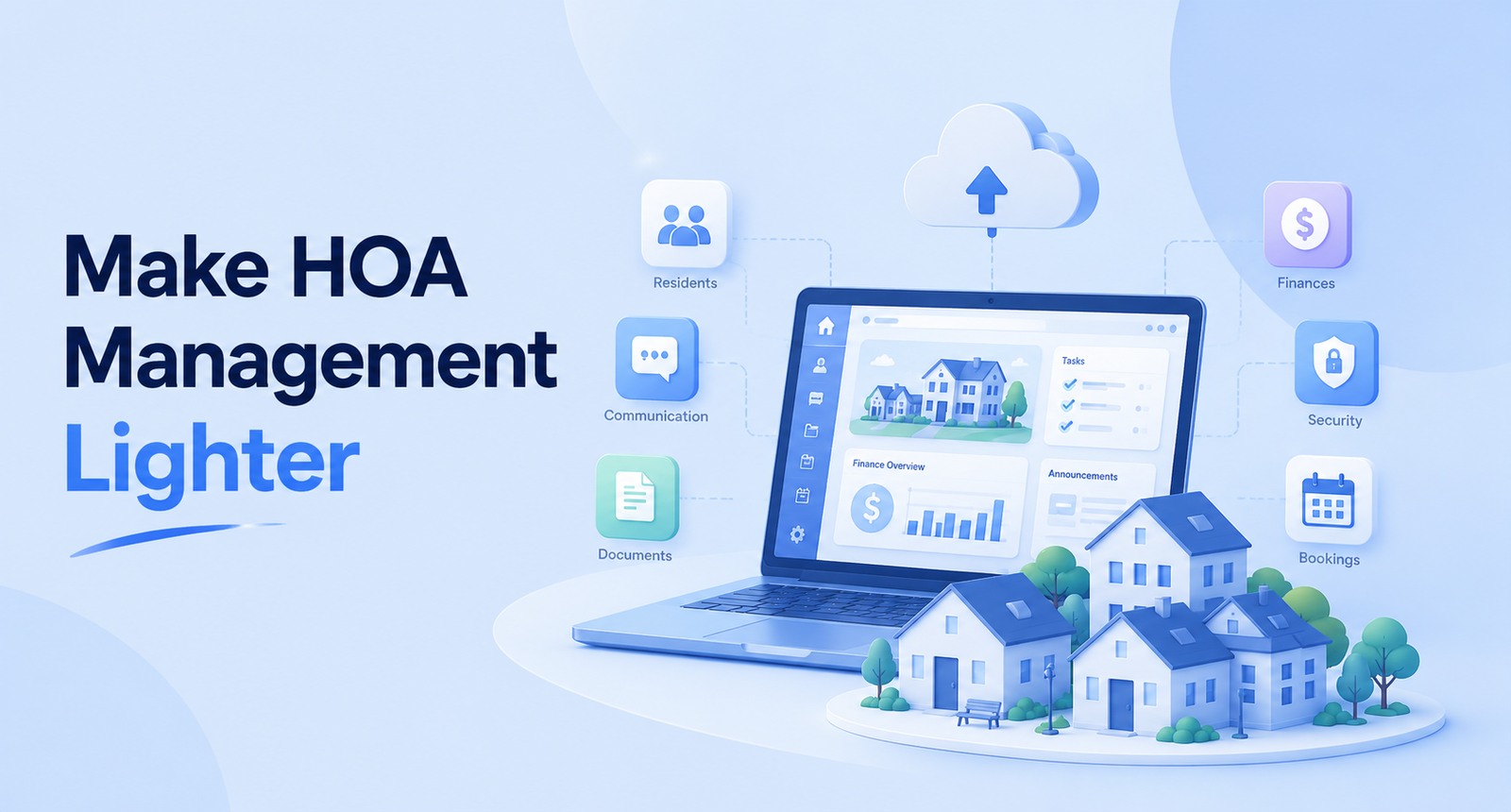
Managing communities used to mean just managing people and paperwork. But for most HOA management companies now, tech has become one of the biggest parts of the job. Resident portals need to stay online during peak season. Data across hundreds or thousands of HOA communities needs to stay accurate and secure. Financial reports need to pull clean numbers when a board asks for them.
None of this is easy on legacy systems that were never built for this kind of scale. Every year they fall a little further behind what the job now demands. Cloud software development services help close that gap. They give management companies infrastructure that’s built for how the HOA management business runs today.
From Legacy to Cloud: Why Modern Community Associations Are Making the Switch
1. HOA Boards and Managers Aren't Office-Bound Anymore
Board meetings happen over video calls now. Property managers check on communities from their phones. Approvals need to happen on the go. Systems built for one location don’t hold up under this kind of flexibility. Cloud-based HOA management software does. Anyone with the right access can get what they need, from wherever they’re working.
2. Residents Expect Answers Now Not Next Week
Residents want to check their dues, make reservations for programs, or submit an ARC request on their own time through online portals. It’s become a basic expectation. Cloud infrastructure makes this kind of real-time, self-service access possible, preventing extra strain on staff.
3. Data Security Can't Be an Afterthought in HOA Management
HOA management companies sit on a lot of sensitive data. On legacy systems, protecting it depends on someone remembering to patch a server. One missed update is all it takes to cause a major security incident. Cloud infrastructure doesn’t leave security to chance. Updates happen automatically and access stays controlled at every level.
4. HOA Teams Shouldn't Have to Double as IT Support
Most HOA management companies never intended to become their own IT department. But that’s what happens as systems age. Moving to the cloud shifts that responsibility to infrastructure built and maintained by people who specialize in exactly that. Internal teams get their time back.
5. Legacy Software Gets Harder to Leave Over Time
Legacy platforms have a way of boxing companies in. The longer you stay on legacy systems, the harder the move becomes. Over time, more data and integrations need to be moved or updated. Switching to the cloud sooner is almost always easier than switching later.
Benefits of Cloud-Based Homeowner Association Management Software
Custom software solutions delivered through the cloud remove several operational burdens at once. Staff can work from wherever they are. The system keeps itself current without anyone scheduling updates. Data stays protected and gets backed up daily by default. There’s no server room to maintain. The platform keeps running smoothly even during the busiest stretches.
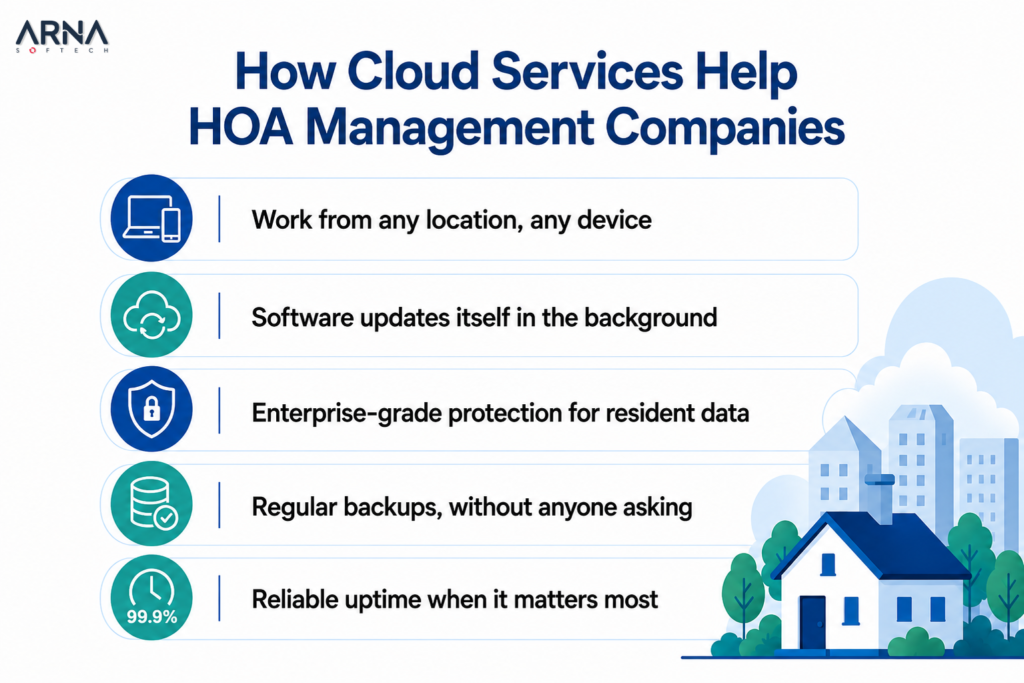
These benefits change how an HOA management company operates daily. Staff spend less time managing systems and more time managing communities. Budgets become easier to plan, since costs stop showing up as unexpected repairs or emergency fixes.
And as the company adds more communities, the infrastructure keeps pace instead of becoming a constraint. That’s the real business impact: fewer operational bottlenecks, and more room to grow without growing risk.
Must-Have Capabilities of Cloud-Based HOA Platforms
A modern community management system should bring resident services, community operations, board oversight, communication, payments, reporting, and integrations into one connected system. When every core function is connected, organizations can standardize operations across communities while still supporting the unique requirements of each one.
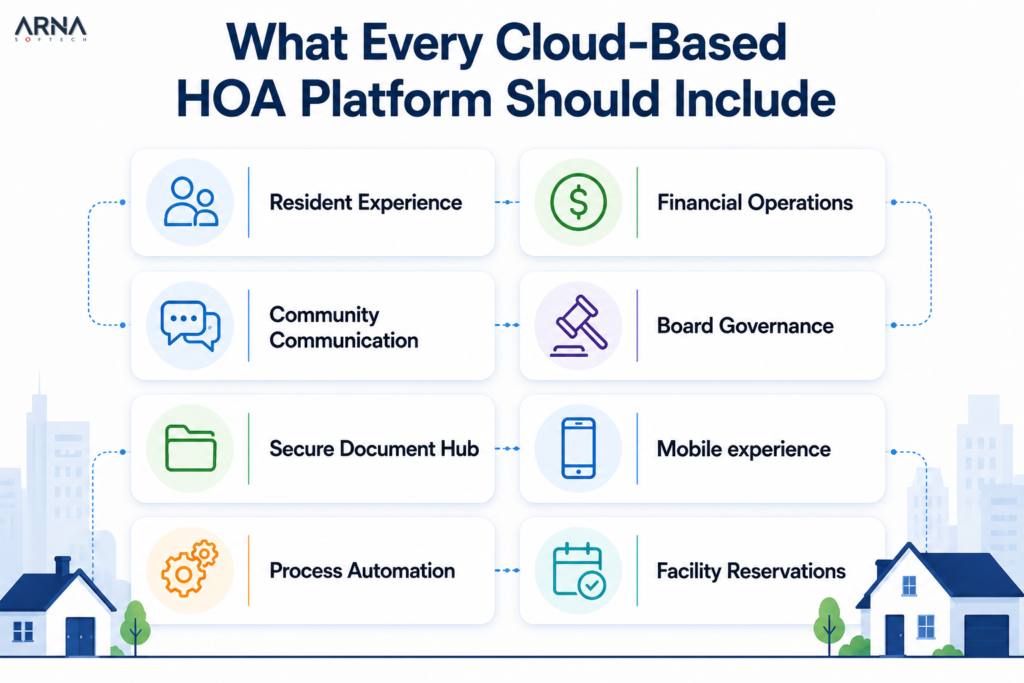
These capabilities improve the experience of everyone using the platform. Residents complete tasks without unnecessary follow-ups. Property managers spend less time coordinating routine work. Boards have the information they need to make informed decisions.
What’s more is that with software development services, you can configure the platform around your team’s workflows while supporting the governance models of every community you manage.
Key Considerations When Moving to a Cloud-Based Platform
- Plan the transition carefully. Existing community records, financial data, documents, and historical information should move to the new platform without disrupting day-to-day operations.
- Protect community and resident data. Think about strong security practices, access controls, and compliance measures to keep the data safe.
- Build for future growth. The platform should comfortably support new communities, more users, and changing operational requirements without major redevelopment.
- Make sure the platform fits into your existing business systems. It should integrate smoothly with any other business systems your teams already depend on.
- Help all end-users embrace the platform through intuitive design, practical training, and phased implementation.
How Arna Softech Builds Cloud-Based Community Association Solutions
We help HOA management companies modernize legacy applications. The goal is to create better digital experiences for residents and make day-to-day operations easier for board members and volunteers.
Our team also builds cloud-based platforms from the ground up for organizations that want to support multiple communities from day one and scale with confidence. To see our cloud-native software development services in action, explore one of the cloud-based platforms we’ve built in our Recreation Management Case Study.
Frequently Asked Questions (FAQs)
How Much Does Custom HOA Software Development Typically Cost?
Custom software solutions for HOAs can range from tens of thousands to several hundred thousand dollars. Cost typically depends on the number of communities supported, integrations, custom workflows, user roles, and features required.
How to Choose a Vendor for Custom HOA Management System Development?
Look for a partner with software development services experience in HOA operations. These include resident portals, payments, maintenance, amenity bookings, board workflows, and multi-community management. Review relevant case studies and the way they handle data security and customization.
What is Multi-Tenancy in the Context of Property Management Software?
Multi-tenancy lets an HOA management company manage multiple communities through one platform. Your teams can manage the entire portfolio from one system, with each community keeping its own data, users, rules, and way of operating.