Most procurement teams want faster processes and better visibility. But replacing existing systems isn’t always an option. It’s expensive and disruptive.
That’s where AI proves its value. Modern AI solutions layer on top of your current ERP or procurement tools. No rip-and-replace required. This blog covers how solutions for procurement automation powered by AI are helping procurement teams work smarter, without changing the systems they already rely on.
How AI Procurement Solutions Improve Procurement Operations?
1. Finding the Right Suppliers Faster
What AI does:
• Matches required products with suppliers based on availability, pricing, and past performance
• Creates a streamlined RFQ process by helping teams review, organise, and compare supplier responses faster
• Speeds up supplier comparisons by analysing quotes, delivery timelines, and past supplier performance within minutes
• Tracks supplier status, delivery reliability, and potential risks in real time
Business impact:
• Quicker sourcing decisions
• Lower supplier-related delays
• Improved purchasing confidence
2. More Control Over Procurement Spending
What AI does:
• Organises purchasing data automatically
• Identifies opportunities to consolidate purchases
• Highlights unnecessary spending trends.
• Helps teams spot duplicate purchases, off-contract buying, or spending outside approved suppliers.
Business impact:
• Better cost visibility
• Reduced budget leakage
• Stronger financial planning
3. Better Planning Based on Future Demand
What AI does:
• Predicts future purchasing requirements using historical patterns
• Flags possible supply-demand mismatches early
• Supports proactive inventory planning
• Highlights recurring stock shortages or over-ordering patterns before they affect procurement cycles
Business impact:
• Fewer shortages and excess orders
• More accurate procurement strategies
• Reduced inventory costs
4. Improved Buying Decisions Through Cost Intelligence
What AI does:
• Detects pricing patterns over time
• Recommends lower-cost alternatives or equivalent products
• Uses historical pricing trends to support stronger supplier negotiations
Business impact:
• Improved cost savings
• Stronger negotiation outcomes
• More value from procurement budgets
5. Less Time Spent Reviewing Contracts Manually
What AI does:
• Pulls key terms, obligations, and renewal dates automatically
• Flags unusual clauses or compliance concerns
• Points out upcoming renewals early to avoid last-minute purchasing decisions
• Makes contract information easier to search and track
Business impact:
• Faster contract cycles
• Reduced compliance risks
• Better contract visibility
How to Implement AI Procurement Solutions?
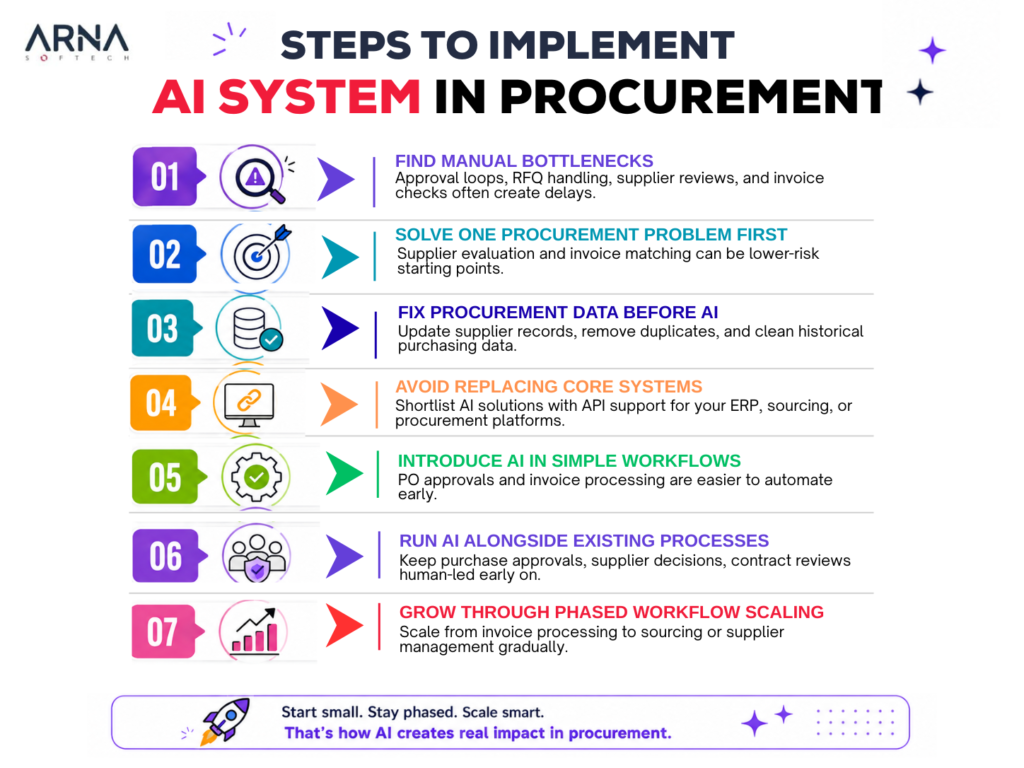
1. Decide Your AI Entry Points – Document every step in your procure-to-pay process. Identify the ones that still rely on manual effort.
2. Define What You Want AI to Solve – Once you’ve hired AI developers, pick one or two specific problems to solve with the AI solution. Maybe supplier review, RFQ handling, or contract reviews.
3. Assess Current Procurement Systems and Data – Review the procurement tools you’re already using. Like ERP platforms and supplier databases. Also check if supplier records, purchasing history, and spend data are prepared to support AI automation system.
4. Choose AI Tools That Connect to Your Current Systems – Use AI software development solutions that integrate with your procurement tools via APIs. Avoid tools that require migrating data or replacing existing software.
5. Run a Small-Scale Pilot – Deploy the AI automation system on one workflow first. Invoice matching or Purchase Order approvals are good starting points.
6. Run AI Along With Existing Processes Initially – Let AI systems operate in parallel with your current workflow before replacing any steps. This gives your team time to trust the new system.
7. Measure and Scale – Track performance against the metrics you set. These could be cycle times, error rates, and cost savings. Use the results to make automation more effective. And then roll it out to the next workflow.
Schedule a Meeting with our AI Experts to Explore the Right Solution Now!
Why Businesses are Investing in AI Automation Procurement Solutions?
Procurement teams today manage several suppliers, longer approval cycles, and greater pressure to control spending. Manual processes make scaling harder. Teams that adopt AI systems are seeing faster approvals, better supplier decisions, and real visibility into spend. Those that don’t are falling behind on speed and efficiency.
At Arna Softech, we have delivered AI-powered solutions for procurement automation in this space. This includes projects focused on improving RFQ workflows and procurement efficiency. Read our case study to learn how we applied AI to a real procurement challenge.
Frequently Asked Questions (FAQs)
What is Procurement Automation?
It means using technology to handle repetitive procurement tasks that would usually be done manually. Things like raising purchase orders, routing approvals, matching invoices, and tracking supplier communications.
What Are the Essential Features in Procurement Automation Solution?
Some useful automated features include:
• Purchase Order creation
• Approval workflows
• Spend analytics
• Supplier management
• Contract tracking
• ERP integration
How to Reduce Rogue Spending with Procurement Automation?
Procurement automation helps put clearer approval processes in place. It also makes purchases easier to track across teams. This gives better visibility into who is buying what and helps identify purchases that do not follow procurement policies.